홍콩한타임즈
반려동물, 나라마다 부르는 이름이 다르다고?
카톡 단톡방의 지적이 일깨워준, ‘너무 귀여워 심장이 아픈 존재’들
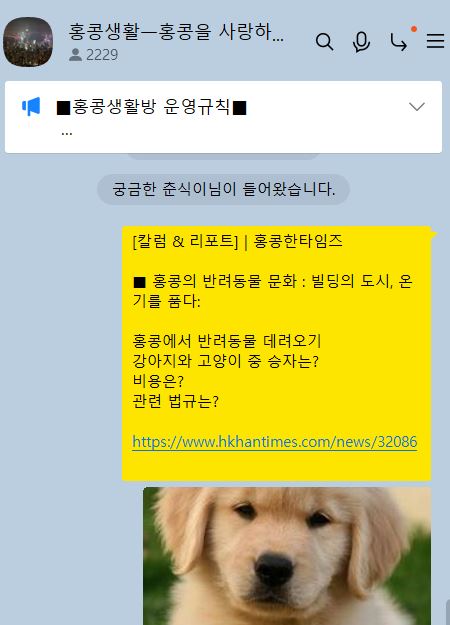
수년 전 기사를 쓰며 ‘애완견’이라는 단어를 제목에 넣었다가 당황스러운 경험을 한 적이 있다. 홍콩 한인 단체 대화방에서 “요즘은 ‘애완견’이 아닌 ‘반려견’으로 부른다”는 지적을 받은 것이다.
해외에 오래 머물다 보니 고국의 정서와 언어적 변화를 쉽사리 체화하지 못했다는 자책이 먼저 들었다. 그 무렵 한국은 ‘애완’이라는 표현을 ‘반려’로 바꾸어 부르자는 인식이 막 싹트던 시기였다.
귀여워하고 가지고 놀다 버릴 수 있는 소유물로서의 ‘애완(愛玩)’이 아니라, 삶의 여정을 평생 함께 걸어가는 가족으로서의 ‘반려(伴侶)’. 단톡방의 그 작은 지적은 내게 동물을 바라보는 시선의 커다란 전환점이 되었다.
홍콩교민 생활방 카톡 https://open.kakao.com/o/gwcOvnuc
참여코드 : h0ngk0ng 참여코드 0은 숫자 (현재 순수교민 2,229명)
홍콩의 반려동물 문화에 대한 칼럼을 쓰면서 각 나라의 동물애호가들이 부르는 명칭이 궁금해져 알아보았다.
언어가 담아낸 동반자의 얼굴: ‘Fur Baby’부터 ‘털 달린 코’까지. 언어는 사회의 철학이 숨어있는 가장 정직한 거울이다.
소유물이나 취미 생활의 대상으로 다뤄지던 동물이 인간의 삶 한가운데로 들어오면서, 세계 각국이 이들을 부르는 명칭 또한 드라마틱한 진화를 거쳐왔다. 단순히 ‘키우는 개와 고양이’를 넘어 가족이자 인생의 동반자로 자리 잡았다.
‘소유’에서 ‘혈연’으로: Fur Baby와 毛孩(모해)
과거 영미권에서 동물은 단지 Pet에 불과했다. 그러나 오늘날 서구권의 보호자들은 스스로를 ‘주인(Owner)’ 대신 ‘Pet Parent(반려 부모)’라 칭하며, 아이들을 ‘Fur Baby(털복숭이 아기)’라고 부른다
동서양의 문화적 국경을 뛰어넘어, 동서양을 잇는 국제도시 홍콩과 중화권에서도 이와 정확히 일치하는 단어가 자리 잡았다. 바로 ‘毛孩(모해), 직역하면 ‘털이 난 내 아이’란 뜻이다. 한 집 안에서 먹고 자며 체온을 나누는 생명을 더 이상 ‘남의 종’으로 보지 않고, 털이 좀 많이 났을 뿐인 내 혈육이자 자식으로 받아들이겠다는 의미이다.
반려동물의 주인이 오히려 종이 되는 재미있는 호칭도 있다. ‘집사’와 ‘鏟屎官(찬스관)’로 스스로 자칭한다. 이는 동물에 대해 ‘자발적 순종’을 의미한다.
- 홍콩과 중화권: 보호자 스스로를 ‘鏟屎官(찬스관·똥 푸는 관리)’이라 부르거나 ‘貓奴(마오누·고양이 노예)’를 자처한다.
- 일본: 도도한 고양이의 수발을 드는 자신을 ‘しもべ(시모베·하인)’라고 칭하며, 일상 대화에서는 제 자식을 말하듯 ‘うちの子(우치노코·우리 집 애)’라는 말을 입에 달고 산다.
- 한국 역시 고양이의 수발을 드는 ‘집사’나, 개를 상전처럼 모시는 ‘댕댕이 어르신’이라는 유쾌한 표현이 널리 쓰인다.
-독일: 반려견과 반려묘를 사랑스럽게 부를 때 ‘Fellnase(펠나제·털 달린 코)’라는 단어를 쓴다. 킁킁거리는 촉촉한 코와 보송보송한 털을 가진 존재에 대한 서정적인 묘사다. 나아가 ‘Vierbeiner(피어바이너·네 발 달린 친구)’라는 표현을 통해 동등한 위치의 친구로서 예우를 표한다.
-스페인: ‘털(Pelo)’이라는 단어에 애교 섞인 접미사를 붙여 ‘Peluditos(펠루디토스·털복숭이 귀요미들)’라 부른다.
- 영국의 ‘Fur Baby’, 홍콩의 ‘毛孩’, 독일의 ‘Fellnase’, 그리고 한국의 ‘반려동물’. 언어는 제각각이지만 그 안에 담긴 본질은 하나로 귀결된다. 바로 "너는 내 삶의 소중한 일부이자, 내가 책임져야 할 생명"이라는 고백이다.
부르는 호칭이 바뀐다는 것은 결국 우리가 그들을 바라보는 '눈빛'과 '마음의 깊이'가 달라졌음을 의미한다. ‘애완에서 ‘반려로, 그리고 각국의 사랑스러운 애칭들로 이어진 이 언어적 여정의 끝에는 결국 ‘평생을 함께하겠다’는 약속이 자리 잡고 있다.
지구 반대편의 누군가도, 그리고 이곳 홍콩의 우리도, 모두 같은 마음으로 그 작은 생명들의 손을 잡고 있는 셈이다.
홍콩한타임즈 이유성 발행인/기자
A few years ago, while writing an article, I experienced a flustering moment when I used the word Aewangyeon (애완견: "pet dog," with a connotation of a toy or object) in the headline. Shortly after publication, several members in a KakaoTalk group chat for Korean expats in Hong Kong pointed out: "These days, we call them Banryeogyeon (반려견: 'companion dog'), not Aewangyeon."
My first reaction was self-reproach for failing to naturally absorb the evolving linguistic nuances and shifting cultural sentiments of my homeland after living overseas for so long. At that time in South Korea, the movement to replace the term Aewan with Banryeo was just taking root.
The distinction explained by the
group member was clear. Aewan (愛玩) carries a consumerist nuance—loving something as a toy or plaything. In contrast, Banryeo (伴侶) signifies a lifelong companion and family member walking through life together. That small correction in the group chat marked a major turning point in how I view animals.
The Faces of Companionship Reflected in Language: From 'Fur Baby' to 'Wet Nose'
Language is the most honest mirror reflecting a society's core philosophy.
As animals transition from being treated as possessions or hobbies to living at the very center of human lives, the terms used to address them across the globe have undergone a dramatic evolution. They have moved far beyond merely being "dogs and cats we raise" to becoming true family members and life companions.
In the past, animals in the English-speaking world were referred to simply as "pets." Today, however, guardians in the West call themselves "Pet Parents" instead of "Owners," fondly referring to their companions as "Fur Babies."
Crossing cultural boundaries between East and West, an identical concept has firmly established itself in Hong Kong and the broader Chinese-speaking world: Mou Hoi (毛孩), which literally translates to "my child with fur." It is a affectionate declaration that a living being sharing one's home, food, and warmth is no longer viewed as a subordinate entity, but as one's own blood and child—just with a bit more fur.
There are also humorous titles where owners playfully position themselves as servants. Terms like "butler" or "poop-scooping officer" reflect a lighthearted, voluntary devotion to their animals:
Hong Kong & Chinese-Speaking World: Guardians humorously refer to themselves as Chaan Si Gun (鏟屎官: "poop-scooping officer") or Maau Nou (貓奴: "cat slave").
Japan: Owners serving aloof cats call themselves Shimobe (しもべ: "servant"), while talking about their pets in daily conversations as Uchi no Ko (うちの子: "our child").
South Korea: Terms like Jipsa (집사: "butler") for cat owners or Daeng-daeng-i Eoruesin (댕댕이 어르신: "venerable puppy senior") for pampered dogs are widely used with affection.
Germany: Dog and cat lovers affectionately use the word Fellnase ("furry/wet nose")—a poetic description of a damp, sniffing nose and soft fur. Furthermore, the term Vierbeiner ("four-legged friend") is used to accord them equal respect as friends.
Spain: An endearing suffix is attached to the word for fur (pelo), creating the affectionate term Peluditos ("furry little cuties").
Whether it is Britain’s "Fur Baby," Hong Kong’s "Mou Hoi," Germany’s "Fellnase," or South Korea’s "Banryeodongmul," the languages differ, but the underlying essence converges into one shared confession: "You are a precious part of my life, and a living soul I am responsible for."
A shift in what we call them ultimately signifies a change in the gaze and depth of heart with which we look upon them. From Aewan to Banryeo, and through all the endearing terms around the world, this linguistic journey ultimately rests upon a single promise: to stay together for a lifetime.
On the other side of the globe, as well as right here with us in Hong Kong, we are all holding the paws of these small, precious lives with the exact same heart.
홍콩한타임즈 이유성 발행인/기자
copyrights@홍콩한타임즈(www.hkhantimes.com) 무단전재 및 재배포 금지
▲ 홍콩한타임즈 광고후원 문의 : Email: hkkrtimes@gmail.com / 카톡ID: 242500ryune
/Tel.: 852 9730 1755
♥ 홍콩교민 생활방 카톡 https://open.kakao.com/o/gwcOvnuc
참여코드 : h0ngk0ng 참여코드 0은 숫자 (현재 순수교민 2,225명)
[홍콩 광고·홍보] 하루 커피 한 잔도 안되는 값으로 홍콩 전역에 내 가게 소문내는 법
"홍콩 교민·비즈니스 타깃, 아직도 효과 없는 광고에 돈 쓰고 계신가요?"
독보적인 독자층과 압도적 영향력을 보유한 홍콩한타임즈가 브랜드 인지도 상승과 매출 확대를 확실하게 증명합니다. 하루 커피 한 잔도 안 되는 최저 비용으로 최대의 홍보 효과를 누리세요!
주요 혜택: 교민 사회 밀착 노출 / 타깃 맞춤형 브랜드 홍보 / 가성비 최적화
광고후원 문의:
이메일: hkkrtimes@gmail.com
전화/카카오톡/왓셉: (852) 9730-1755